.png)


How to Recommend Chauffeur Service for Hotel Guests

When a guest steps off a long-haul flight and their arranged pickup falls through, the hotel takes the blame. That single moment can undo everything your property has worked to build. Knowing how to recommend chauffeur service for hotel guests is not a nice-to-have skill for concierges and event planners. It is a core operational competency that directly affects guest satisfaction scores, repeat bookings, and your property’s reputation. This guide walks you through every stage of the process, from understanding what types of chauffeur services hotels offer to troubleshooting failures before guests even notice them.
Table of Contents
Key takeaways
Point | Details |
Match service to guest profile | Choose between private, shared, or hourly chauffeur based on the guest’s budget, group size, and event type. |
Confirm 24–48 hours ahead | Proactive confirmation reduces last-minute anxiety and prevents scheduling gaps during peak periods. |
Communicate pricing upfront | Transparent cost disclosure, including premium vehicle surcharges, builds trust and prevents disputes. |
Use live data for scheduling | Align driver shifts with real-time flight data, not historical averages, to avoid missed pickups. |
Build in fallback options | Pre-authorize alternatives like ride vouchers so concierge staff can act immediately during service disruptions. |
How to recommend chauffeur service hotel guests will actually trust
The single biggest mistake hospitality professionals make is treating a chauffeur recommendation like a referral. You mention a provider, hand over a business card, and consider the job done. The reality is that guests hold the hotel accountable for every transportation experience they have, whether or not the hotel booked it directly. Your recommendation carries your brand’s weight.
Multiple transportation options allow hotels to meet diverse guest preferences and budgets, and flexibility in matching service type to traveler needs is what separates a good recommendation from a great one. When you understand the service landscape before a guest even asks, your advice becomes genuinely useful rather than generic.
Types of chauffeur services hotels offer
Before you can make a confident recommendation, you need to know what you are recommending. The three core service categories each serve a different guest profile.
Private point-to-point chauffeur service is a dedicated vehicle assigned to one party for a single trip. This is the right call for VIP guests, executives, and anyone arriving on a late-night flight. There is no waiting for other passengers, no shared space, and the itinerary belongs entirely to the guest.
Hourly or “as-directed” chauffeur service gives guests a vehicle and driver for a set block of time. This works well for corporate travelers attending multiple meetings, guests attending multi-venue events, or anyone who needs flexibility without the cost of a full-day private hire.
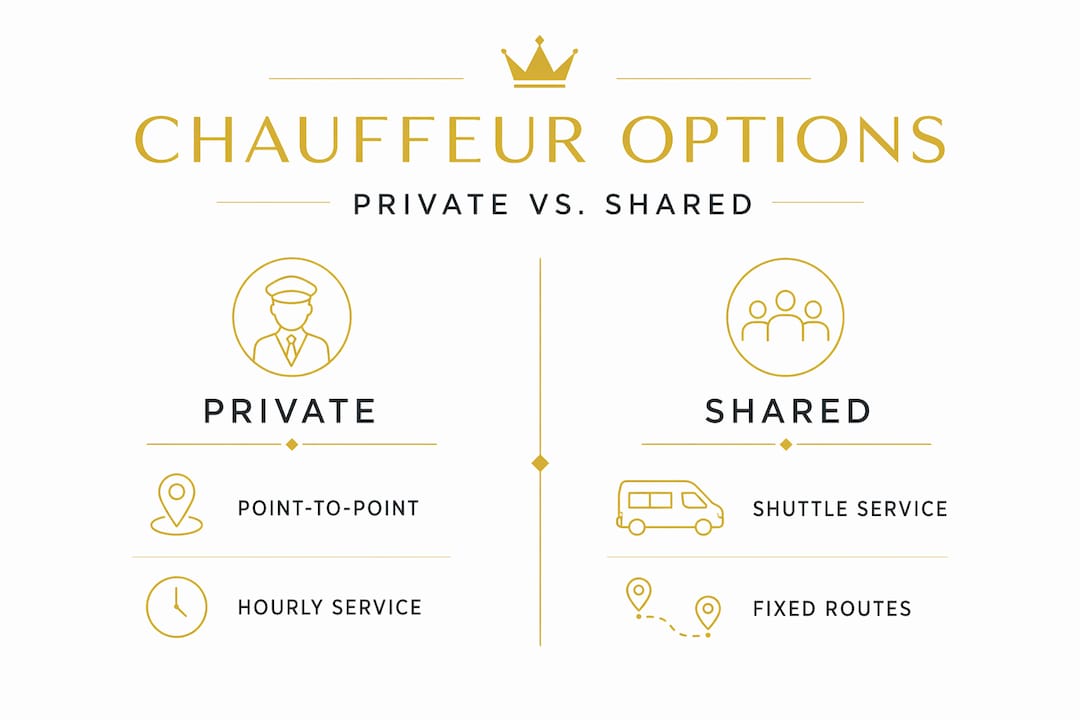
Shared shuttle service is the budget-conscious option. Multiple guests share a vehicle on a fixed route, typically between the airport and the hotel. It costs less but trades privacy and scheduling flexibility for affordability.
Here is a quick comparison to guide your recommendations:
Service type | Best for | Key advantage | Trade-off |
Private point-to-point | VIPs, executives, late arrivals | Complete privacy and flexibility | Higher per-trip cost |
Hourly chauffeur | Corporate travelers, multi-stop days | Time flexibility | Metered cost can add up |
Shared shuttle | Budget travelers, large groups | Lower cost per person | Fixed schedule, shared space |
Pro Tip: When a guest is attending a high-profile hotel event, always default to a private chauffeur recommendation. Shared shuttles create unpredictable arrival times that can disrupt event seating, catering schedules, and VIP protocols.
Vehicle selection matters too. Sedans suit solo travelers and couples. SUVs handle small groups and guests with significant luggage. Minivans and minibuses work for larger delegations. Knowing a provider’s fleet before you recommend them is non-negotiable.

Preparation steps before making a chauffeur recommendation
Recommending confidently requires preparation on your end before the guest ever asks. Winging it creates gaps that guests notice.
Audit your preferred providers. Verify that each chauffeur service on your list is licensed, insured, and operating with current accreditation. A provider that was reliable last year may have changed ownership, reduced their fleet, or dropped service standards.
Confirm availability windows. Confirm pickup arrangements 24–48 hours in advance, especially during peak travel periods. Do not assume a provider has capacity because they have served your property before.
Understand the pricing structure completely. Transparency regarding pricing and extra costs builds guest trust and prevents misunderstandings. Know the base fare, premium vehicle surcharges, after-hours fees, and any last-minute change penalties before you quote anything to a guest.
Integrate live data into your coordination. Planning driver staffing based on real-time flight data improves reliability over historical averages. Share flight numbers and estimated arrival times with your chauffeur provider so they can track delays without you having to chase them.
Set up guest notifications. Mobile apps and automated messaging increase guest confidence by delivering real-time driver and ETA updates. Confirm that your preferred provider offers this capability before recommending them.
Pro Tip: Build a one-page transport brief for each major event or VIP arrival. Include the guest’s name, flight details, preferred vehicle type, pickup location, drop-off address, and any special requirements. Send this to the chauffeur provider 24 hours out and keep a copy at the front desk.
Step-by-step process to book chauffeur for hotel event guests
Once your preparation is in place, the booking process itself should follow a consistent sequence. Improvising at this stage is where most errors occur.
Gather guest requirements early. Ask about group size, luggage volume, accessibility needs, preferred pickup time, and any schedule flexibility. Do this at check-in or, better yet, before arrival via pre-stay communication.
Select the right service type. Match the guest’s profile to the appropriate option. A solo business traveler heading to a morning conference needs a private sedan booked through your point-to-point chauffeur service. A family of five with strollers needs an SUV or minivan.
Confirm the booking in writing. Send the guest a confirmation that includes the driver’s name, vehicle description, license plate, pickup time, and a contact number. Ambiguity at this stage causes anxiety.
Brief the driver. Communicate any special guest needs, luggage requirements, or schedule sensitivities directly to the driver or dispatch. Do not rely on the guest to relay this information themselves.
Monitor the pickup in real time. Track the driver’s status on the day of travel. If a flight is delayed, contact the provider immediately. Scheduling driver shifts aligned with actual flight times rather than historical averages is the operational standard that separates reliable providers from unreliable ones.
Here is a quick reference for matching booking lead times to service types:
Service type | Recommended booking lead time | Notes |
Private sedan or SUV | 24–48 hours | Longer for peak seasons and major events |
Hourly chauffeur | 48–72 hours | Confirm driver availability for full duration |
Shared shuttle | 12–24 hours | Check schedule alignment with guest arrival |
Airport transfer | 24 hours minimum | Pair with live flight tracking |
Troubleshooting common chauffeur service problems
Even well-planned arrangements break down. A flight diverts. A driver calls in sick. A vehicle breaks down. Your value as a hospitality professional is measured by how you handle these moments, not how you avoid them entirely.
Here are the situations you will encounter most often and how to manage them:
Flight delays: The moment you see a delay notification, contact the chauffeur provider. Do not wait for the guest to call you. Most professional providers track flights automatically, but confirming the change directly keeps everyone aligned.
Last-minute cancellations by the provider: This is where pre-authorized fallback options matter most. Pre-authorized fallback options such as taxi vouchers or ride-hail credits reduce guest frustration during transfer failures. Have these ready before you need them, not after.
Unexpected cost disputes: If a guest is surprised by a charge, the problem started in your preparation phase. Revisit how you communicate pricing before bookings are confirmed.
Driver communication failures: Guests should never be standing at an arrivals hall wondering who is picking them up. Confirm that your provider sends driver details and a tracking link before the vehicle departs.
Empowering concierge staff to offer immediate alternatives mitigates negative guest experiences during service disruptions. Pre-approved responses and clear authority to act are what allow your team to recover a situation before it becomes a complaint.
Training your front desk team to handle transport issues proactively, rather than escalating every problem to a manager, is one of the most underrated investments a hotel can make in guest satisfaction.
Measuring and refining your chauffeur recommendations
A recommendation system that never gets reviewed eventually becomes a liability. Build a simple feedback loop into your process.
After each transfer, ask guests a single direct question: did the transportation meet your expectations? You do not need a lengthy survey. A one-question follow-up via email or at checkout captures enough data to identify patterns. If a specific provider generates repeated complaints about late pickups or unprofessional drivers, that is your signal to reassess the relationship.
Track your on-time pickup rate by provider. If you are not receiving this data from your chauffeur partners, ask for it. Providers who cannot or will not share performance data are not partners worth keeping. Over time, this data lets you tailor your hotel guest transportation solutions to specific guest segments. Corporate travelers may prioritize punctuality above all else. Leisure guests may value vehicle comfort more. Knowing the difference helps you recommend smarter.
Pro Tip: Create a quarterly review of your preferred transport providers. Score them on punctuality, communication, vehicle condition, and guest feedback. Use this scorecard when negotiating rates or deciding whether to add or remove a provider from your recommended list.
My take on what actually makes chauffeur coordination work
I have seen properties with beautiful lobbies and exceptional room service completely fall apart on transportation. Not because they lacked good providers. Because they lacked a system.
In my experience, the hotels that consistently deliver excellent guest transport have one thing in common: they treat the chauffeur arrangement as an extension of the guest experience, not a logistical afterthought. That means the concierge who recommends a service also follows up on it. It means the front desk team knows what to do when a driver is late, without waiting for approval. And it means the property has a real relationship with its transport providers, not just a list of phone numbers.
What I have found actually works is building a small internal protocol around every VIP or event arrival. It does not need to be complicated. A shared note in your property management system, a confirmed driver brief sent 24 hours out, and a single point of contact for the guest. That structure alone eliminates most of the problems I have watched hotels struggle with repeatedly.
Technology helps enormously, but only when staff know how to use it. Automated flight tracking and driver notifications are only as good as the person monitoring them. The best luxury chauffeur services I have worked with treat their hotel partners as operational collaborators, not just booking sources. That relationship is worth cultivating.
— Chris
How Crown Transportation Group supports hotels and event planners
When you need a chauffeur service that operates at the standard your guests expect, Crown Transportation Group delivers exactly that. Based in Sydney with operations across Australia, Crown Transportation Group combines professional drivers, a well maintained fleet, and flexible booking options designed for the demands of hotel and corporate travel management.
Whether you need airport transfer services with live flight tracking, private point-to-point transfers for VIP guests, or hourly chauffeur arrangements for multi-stop corporate days, Crown Transportation Group has the infrastructure to handle it. Their VIP chauffeur options are particularly well-suited for high-profile hotel events and executive arrivals. Concierge teams can book online or request a quote directly, making coordination fast and straightforward. Visit Crown Transportation Group to explore the full range of services available for your guests.
FAQ
What is the best way to recommend chauffeur service to hotel guests?
The most effective approach is to match the service type to the guest’s profile and communicate all details, including pricing and driver information, before the trip. Proactive confirmation 24 to 48 hours in advance reduces last-minute problems significantly.
How far in advance should hotels book chauffeur services for guests?
For private transfers and airport pickups, booking at least 24 to 48 hours ahead is the standard recommendation, with longer lead times required during peak seasons or major events.
What types of chauffeur services do hotels typically offer?
Hotels generally offer three options: private point-to-point transfers, hourly or as-directed chauffeur service, and shared shuttle arrangements. Each suits a different guest type and budget level.
How should concierge staff handle a chauffeur service failure?
Pre-authorized fallback options, such as taxi vouchers or ride-hail credits, allow concierge staff to offer immediate alternatives without waiting for management approval, which is critical for maintaining guest confidence during disruptions.
How can hotels measure the quality of their chauffeur recommendations?
Track on-time pickup rates by provider, collect brief post-transfer feedback from guests, and conduct quarterly performance reviews of all preferred transport partners to identify patterns and improve vendor selection over time.
Recommended

Comments